Science education researchers at the Center for Astrophysics, with funding from a National Science Foundation (NSF) grant, developed the Misconception-Oriented Standards-based Assessment Resources for Teachers (MOSART). It’s a suite of multiple-choice tests designed to gauge how well students understand science concepts, in opposition to memorized facts. The tests cover physical science, earth and space sciences, and life sciences across three grade-level groupings: K–4, 5–8, and 9–12.
I was fortunate to have collaborated with this talented group of science educators on multiple museum exhibitions in the past, so they contacted me to lead the design development of both this site and its child site PBMOST.


The client team at the Center for Astrophysics included a project manager, writer, videographer, and developer.
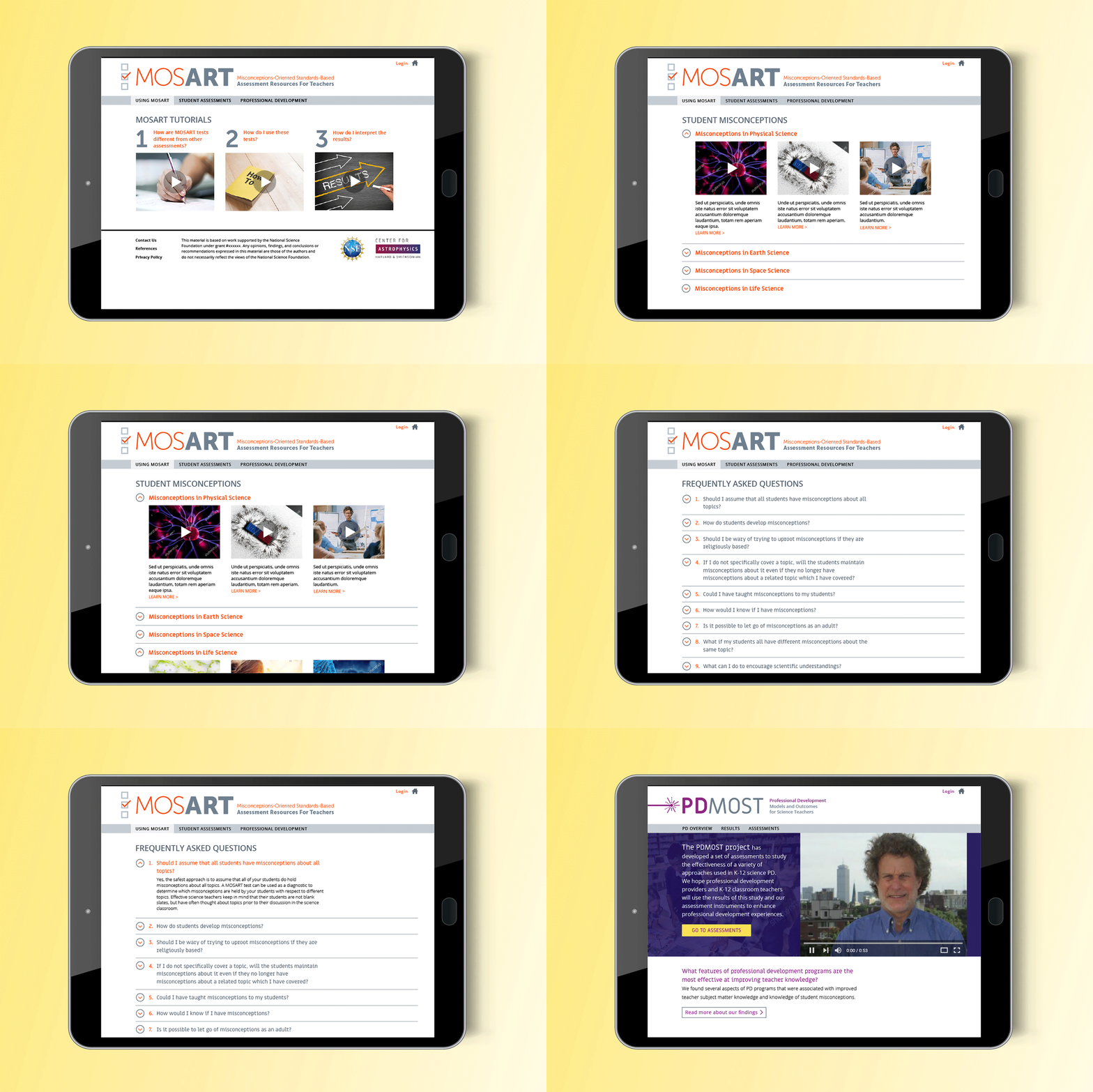
I worked with the team’s content to develop and design all the pages, including storyboarding the user interface in multiple formats: mobile, tablet, and desktop. I provided all assets and specifications to CfA’s in-house web developer.
MOSART is the parent site to PDMOST. PDMOST is MOSART's counterpart—a set of assessments given to science teachers, not students, to study the effectiveness of a variety of science education approaches. The assessments are then used to enhance teachers’ professional development programs. Similar to MOSART, I designed PDMOST’s pages, storyboarding all user interface aspects.
Ironically, this work preceded MOSART, so it was essential for my design strategy to account for the future needs of the parent site. Typefaces and styling are purposefully consistent, but MOSART and PDMOST are designed with unique, yet carefully coordinated, color palettes. Similarly, I designed the PDMOST and MOSART logotypes to be two parts of a whole, each communicating their unique purpose yet with a consistent styling.